 Arashiyama Boat Ride
What to Wear and What to Bring for the Hozugawa River Boat Ride
What to wear on the Hozugawa river boat ride comes down to one relief and one warning: the boat supplies your life jacket, and the one item every operator bans is an umbrella. As of August 2026, riders sit for up to two hours on backless wooden benches under a splash-guard canopy, so the real packing list is short: sun protection, a light layer for the gorge breeze, and shoes you don't mind getting a little damp. This guide walks through the outfit itself, what to bring, what the tour lineup already provides, and the seasonal swings that change the answer, drawn from the operators' own gear lists rather than a generic packing template; see the full comparison for how the tours themselves stack up.
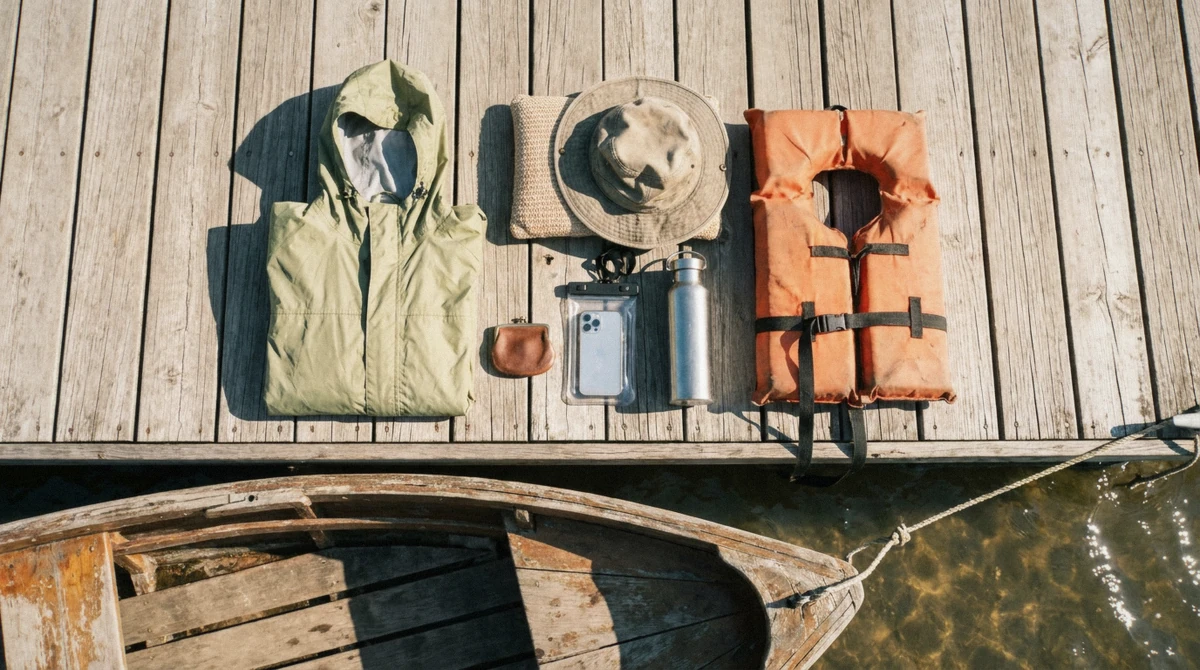
Quick answer What's provided, what's on you, and the one item that's banned
Every boat on the Hozugawa provides your life jacket, sized down for children, so that part of the packing list is already handled. Your own list stays short: sun protection, a light extra layer for the gorge breeze, and closed-toe shoes for the dock steps. The single rule that trips up first-timers is the umbrella ban: bring a rain jacket instead.
Key takeaways
- Every operator supplies the life jacket, adult and child sizes; you can't board without wearing one
- Umbrellas are banned on board, the standard Hozugawa boat ride fits a canopy for light rain, and a rain jacket covers the rest
- Kyoto's daytime high runs from 9°C in January to 33°C in August, and the water always reads cooler than the air (full seasonal breakdown)
- Closed-toe shoes with grip beat sandals for the wet dock steps and the assigned wooden bench
- Book Hozugawa whitewater rafting instead and the wetsuit, helmet, and rafting shoes come free: it's the only tour on this river where gear is fully provided
- Winter boats run 16 passengers with floor seating and no heating, so layers and gloves matter more than anything on this list
What to Wear on the Boat
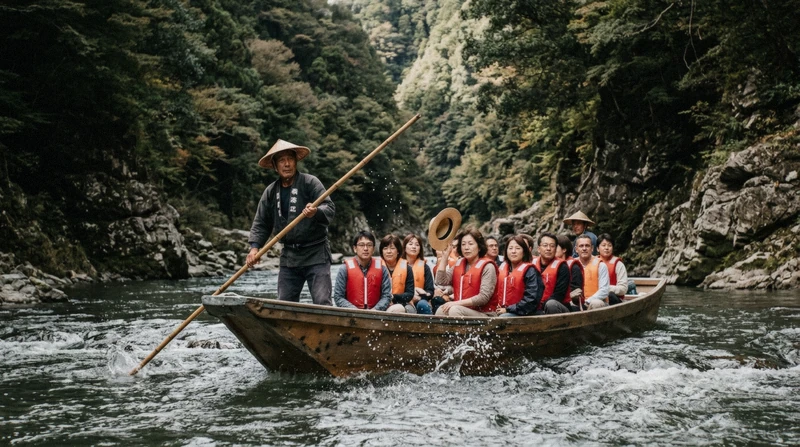
Nobody enters the water on the standard Hozugawa Kudari descent, so the outfit rules are closer to a scenic ferry than a watersport. The exception is the whitewater rafting run, which is its own case below.
Base Layer and Everyday Clothing
Ordinary daywear works for the boat ride itself. Quick-dry synthetic fabric is worth choosing over cotton if you're seated near the bow, since the rapids stretch throws a light spray that cotton holds onto for the rest of the day. There's no modesty dress code here: it's a seated sightseeing boat, not a temple, so the only real consideration is comfort on a backless wooden bench for up to two hours.
Sun Protection
There's no shade over the open river, and Kyoto's summer daytime high sits around 33°C in August with strong reflected glare off the water. A hat, sunscreen, and a light long-sleeve layer cover most of the two hours; sunglasses help more here than on a shaded walking tour, since the light bounces straight off the surface for the full 16 km.
Wetsuit or a Warm Outer Layer
You don't need a wetsuit for the seated boat ride in any season; everyday clothes plus layers handle it. A wetsuit only matters if you book the Hozugawa whitewater rafting run instead, where Kila Kila provides one free along with a helmet and rafting shoes, since that trip has you swimming and paddling through real rapids. For the standard boat ride in winter, the outer layer that matters is warmth, not waterproofing; see the seasonal section below.
Footwear
Closed-toe sneakers or walking shoes are the safe default: they grip the wet dock steps and the narrow gangplank onto the boat, and they're fine for the temple walking most combo tours add afterward. Sandals with a secured back strap are workable once you're off the boat and exploring Arashiyama, but not for boarding, where footing on wet planks is uneven. Flip-flops and backless sandals are the one footwear choice to skip entirely, since they come off easily on the gangplank and offer no grip on wet wood.
Rafting is the exception: Kila Kila hands you rafting shoes at check-in, so your own footwear doesn't matter there beyond getting to the base.
Color choices matter more for comfort and visibility than most riders expect on an open river with no shade.
| Color | Good? | Why |
|---|---|---|
| White | Good in summer | Reflects heat on the exposed bench, though splash shows more on light fabric |
| Black | Caution in July–August | Absorbs heat under direct sun on the open river; fine again once autumn temperatures drop |
| Bright colors (red, yellow) | Good | Easier for the boatmen and dock staff to keep track of you and your kids in a group boarding line |
| Earth tones (green, brown) | Neutral | Blend well with the gorge in photos, though they offer no functional edge on the water itself |
| Cotton, any color | Bad | Stays wet and heavy if the bow catches spray in the rapids, and won't dry before the rest of your day in Arashiyama |
| Quick-dry synthetic | Good | Sheds a light splash and stays comfortable for the full two hours on a wooden bench |
| Loose skirts or long scarves | Bad | Catch the wind through the gorge bends and can snag on the low rail or a boatman's bamboo pole |
What to Bring
None of this needs a special shopping trip; it's the kind of daypack most travelers already carry, tightened up for two hours on the water with no shop until you land.
- Sunscreen, reapply midday; there's no shade over the open river
- Hat with a chin strap, wind picks up through the narrower gorge bends
- Small cash, coins included, the floating food boat near the end is cash only
- Refillable water bottle, no shop or vending machine until you land in Arashiyama
- Light rain jacket, covers heavier rain; the boat's own canopy handles light showers
- Waterproof phone pouch, bow seats catch light spray through the rapids
- Folded cushion or a small towel, two hours on backless wood with no cushioning provided
- One light extra layer, the gorge breeze runs noticeably cooler than Kameoka's streets
- Motion-sickness tablet, if you're prone to it, take it before boarding, not once the rapids start
- A camera strap, hands are often busy holding on through the faster stretches
- A small daypack you can keep on your lap, there's no overhead storage or under-seat locker on board
- A change of socks, worth it if you're catching the Sagano Romantic Train right after landing
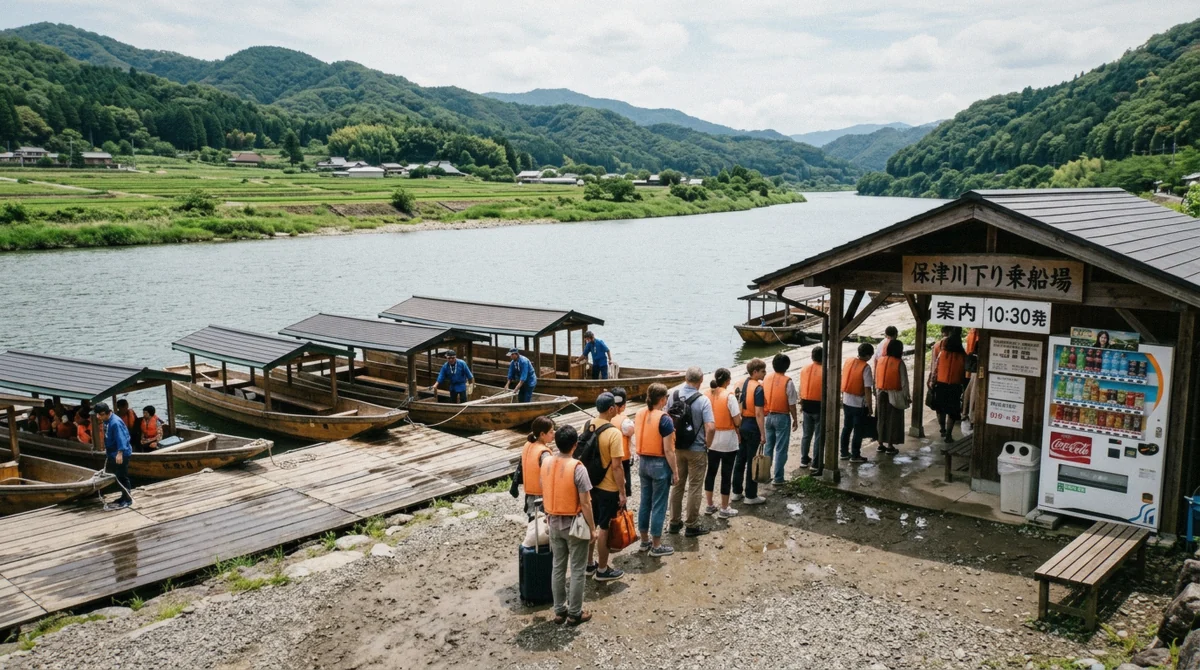
What the Hozugawa Tours Provide (So You Don't Overpack)
This is the table that actually saves you a packing trip, pulled from what each tour on this river includes, not a generic assumption.
| Item | Usually Provided | Bring Your Own | Notes |
|---|---|---|---|
| Life jacket | Yes, all sizes | N/A | Every operator here provides one; refusing to wear it means you don't board |
| Boat seat | Yes | Cushion optional | Backless wood on the standard Hozugawa Kudari boat ride; bring a folded towel if two hours on bare wood worries you |
| Rain canopy | Yes, fitted in light rain | Rain jacket for heavier weather | Umbrellas are not allowed on any boat on this river |
| Wetsuit | Only on the rafting run | N/A | Hozugawa whitewater rafting includes a full wetsuit; the seated boat ride has none because nobody enters the water |
| Helmet | Only on the rafting run | N/A | Same rafting listing; not used on the seated descent |
| Rafting shoes | Only on the rafting run | N/A | Included free with the Kila Kila session; wear your own closed-toe shoes for every other tour |
| Towel | Only on the rafting run | Bring one for the boat ride | Rafting includes a towel afterward; the seated boat ride does not |
| Food and drink | No | Yes | The floating food boat mid-route sells dango, pickles, and drinks for cash only |
| Sunscreen and hat | No | Yes | No operator on this river supplies sun protection on any listing |
| Child-size life vest | Yes, on the standard boat | N/A | Sized down for riders as small as the 80 cm minimum height rule |
What NOT to Wear or Bring
Sourced from the operators' own boarding rules, not a generic travel-blog list.
- Umbrellas, banned on every boat on this river; the canopy handles light rain, a rain jacket handles the rest
- Cotton clothing near the bow, stays wet and heavy if splash reaches you, and stays that way for the rest of your day
- Flip-flops or backless sandals, loose footing on the wet dock steps and the narrow gangplank onto the boat
- Loose scarves or long straps, can catch on the low rail or a boatman's bamboo pole
- Glass bottles, dock and boat rules keep drinks to cans, cups, or a reusable bottle
- Anything you can't hold on your lap, no overhead storage or locker on board; large luggage goes in the coin lockers at JR Kameoka Station
- Valuables you're not prepared to get slightly damp, the bow seats catch spray in the rapids even with the canopy up
Packing by Season on the Hozugawa
The month you travel changes the outfit more than anything else on this list; see the full month-by-month breakdown for crowds and river conditions alongside these numbers.
| Season | Typical High | Wear This |
|---|---|---|
| Winter (December–February) | 9°C to 12°C, colder on the water | Thermal base layer, fleece or down jacket, gloves, hat, scarf, waterproof boots |
| Spring (March–May) | 14°C to 25°C | Light jacket for the morning departure, layers you can peel off by midday, closed shoes |
| Summer (June–August) | 28°C to 33°C | Quick-dry shirt, wide-brim hat, sunscreen, a light rain jacket for June showers |
| Autumn (September–November) | 17°C to 29°C | One light layer for cooler morning slots, closed shoes, sunscreen still worth packing |
Dressing for Winter: No Heating on Board
Winter boats switch to a 16-passenger format with floor seating and no heating, and reviewers regularly mention the December water reading colder than the air temperature suggests. Layer up properly rather than relying on one heavy coat: thermal base layer, a mid layer, gloves, and a hat you can keep on the whole ride. A scarf covers the gap between collar and chin that the gorge breeze finds fastest.
What to Wear for the Photos
Seats on the right side, facing forward, get the best light for most of the ride, along with the better odds at wildlife and the view of Daihikaku Senko-ji temple partway down, worth requesting from the boatman if seats aren't full. For the photos themselves, stark white tends to blow out in the bright reflected river light, while earth tones and the gorge's own greens photograph better against the rock walls. A hat with a chin strap keeps your hands free for the camera instead of chasing a hat through the wind, and standing for a shot is not allowed, tell the boatman what you're after and they'll help you get it from your seat.
None of this list requires a special shopping trip. What matters most is the umbrella swap, the light layer for the breeze, and shoes that grip wet wood; everything else on this page is a nice-to-have rather than a real requirement. For exact fares alongside these packing notes, the ticket breakdown covers what each option actually costs, and it's worth comparing the Hozugawa Kudari tour lineup side by side before you book.
Questions About What to Wear
Can I wear jeans on the Hozugawa river boat ride?
Jeans are fine for the standard boat ride in normal conditions, since most riders stay dry under the canopy. If you're seated near the bow during the rapids stretch, quick-dry pants are the better call, since jeans stay wet and heavy for the rest of your day if they catch spray. For the rafting run, skip jeans entirely, a wetsuit is provided and worn over your own swimwear, not over denim.
Can I wear shorts on the boat?
Yes, shorts are a fine choice for the boat ride in warmer months. The benches are backless wood, so bring a folded cushion or towel if sitting bare-legged against the planks for two hours doesn't sound appealing.
Do I need a wetsuit for the Hozugawa boat ride?
No. The standard boat ride is a seated descent, you stay in your clothes and mostly dry under the canopy. A wetsuit only comes into play on Hozugawa whitewater rafting, where Kila Kila provides one free along with a helmet and rafting shoes for the paddling and river-swim portions of that trip.
What shoes should I wear on the boat ride?
Closed-toe sneakers or walking shoes, for grip on the wet dock steps and the gangplank onto the boat. Flip-flops and backless sandals are the one choice to avoid, since they slip off easily on wet wood and offer no traction boarding or disembarking.
Can I bring an umbrella on the boat?
No. Umbrellas are banned on every boat on this river, since an open umbrella in a group boat with a bamboo-pole crew working around you is a real hazard. The boat fits a canopy for light rain, and a rain jacket covers anything heavier.
What should I wear if I book the winter departure?
Layer up more than you would for a normal winter walk in Kyoto. Winter boats run with 16 passengers, floor seating, and no heating, and reviewers report the water reading colder than the air. A thermal base layer, a mid layer, gloves, a hat, and a scarf cover the two-hour ride better than one heavy coat alone.